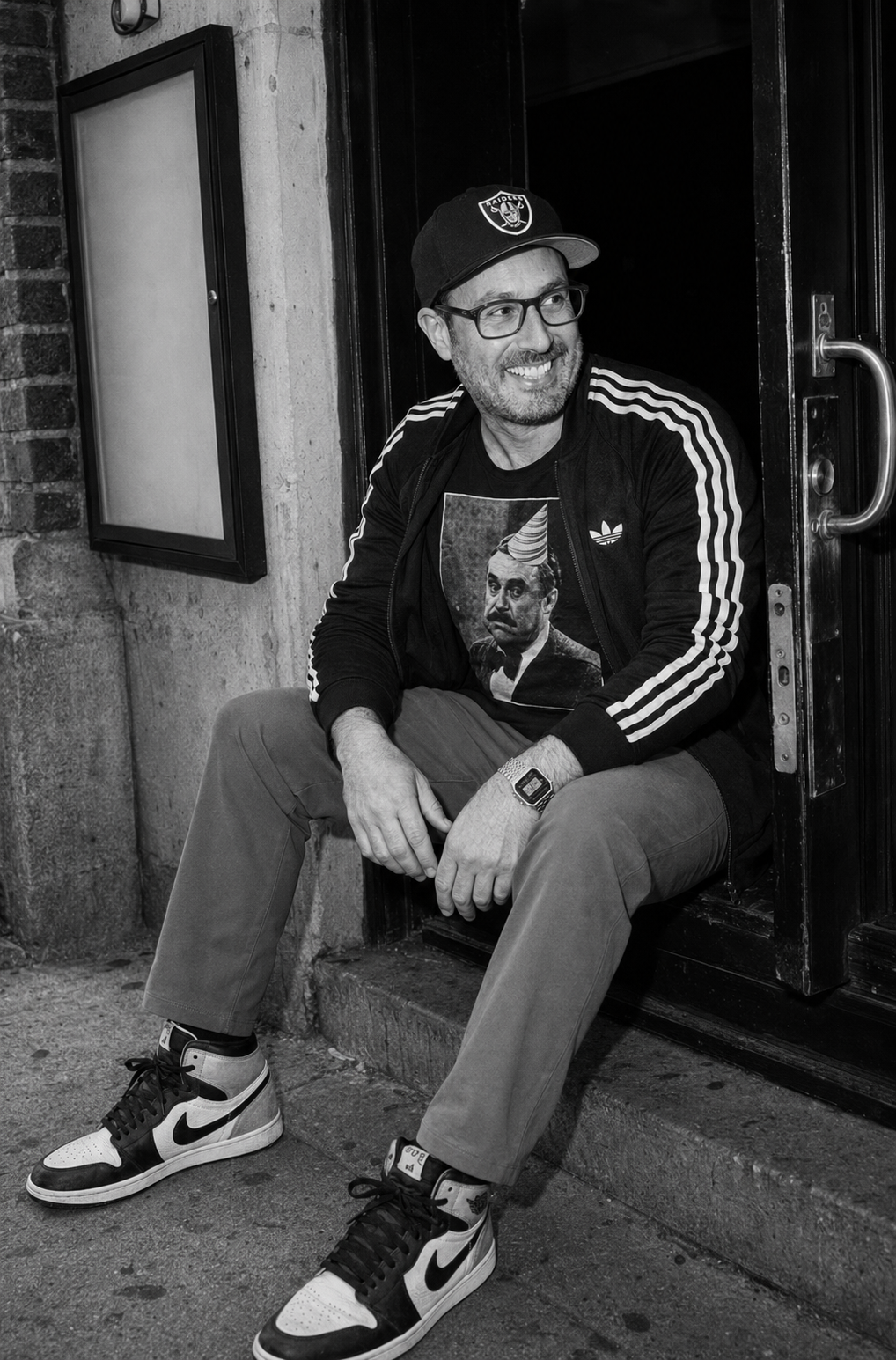
Ben Corber / Profile 01 / Judgment first
Issue 01 Field notes
Taste decides
what belongs.
Creative direction for consumer products, packaging, licensing and the systems that carry a story from first idea to real life.
I work where the creative decision has consequences: the product still has to be made, approved, understood and chosen.

20+ years / Concept → Shelf → Screen
Q / What problem do you solve?
Messy ones.
When a brief is vague, late or commercially complicated, I start by breaking it into the who, what, where, why and how. Then I set priorities, make the handoffs visible and build a workable order of operations.
That can mean product concepts, packaging, factory communication, retail assets or an AI-enabled workflow. The common thread is turning a moving target into a system that can be repeated, checked and scaled.
One story. Many handoffs.
I think of a brand system like Lego: each brick has to connect, but it also has to contribute to the full build.
- Research
- Product
- Packaging
- Retail
- E-commerce
- Feedback
Research, product photography, packaging, social, search, the website, Amazon and testing should not behave like separate campaigns. They are different steps in the same story, each moving a customer closer to confidence and conversion.
For Saba GEM, that meant building an A-to-Z system: research, product and lifestyle imagery, brand direction, social and performance creative, web and Amazon. The purpose was not more content. It was a coherent story across every place the product had to earn trust.
02 / Production receipts
The concept isn’t finished until it survives reality.
At Black & White, speed was not an aesthetic. It was the operating condition. We built seasonal product libraries while the next presentation cycle was already coming into view.
That meant concepts, CADs, style sheets, approvals, manufacturer coordination and retailer expectations had to stay in sync. A good visual is only the beginning. It also has to survive materials, printing, timelines, licensing rules, overseas communication and the person meeting it in a store.
I am old-school enough to understand the physical side — print, colour, specifications, production readiness — and current enough to connect it to digital retail and e-commerce. The job is making them agree.
Q / What does AI change?
Creative leverage
without losing the plot.
AI can make options faster. It does not make the decision for you.
The useful part is acceleration: research, exploration, prototyping and production support that used to take weeks can sometimes move in hours or days. But speed without direction produces work people recognise as generic before they even know why.
“You have to direct the AI model, not the other way around.”
Human judgment still decides what feels believable, what respects the audience, what is technically sound and what is worth shipping. QA is how the work stays honest from concept to handoff.
01 AI makes options faster.
02 Judgment decides which option deserves to ship.
03 QA keeps the handoff honest.

03 / Leadership
Make the team
sound like a team.
I do my best work with people who are curious, direct and willing to share the credit. The best comic-book teams work because every character gets a moment that matters. Creative teams are no different.
My contribution is ideas, structure and the ability to pivot without losing the bigger story. I want a team that is willing to test new tools, protect the human part of the process and keep growing.
Think quickly. Build clearly. Know when to pivot.
Send a page